
“I’ve Tried Orthotics, Therapy, Injections, and I Still Hurt.”

Many people arrive at Alypos after months—or years—of trying to find relief.

You’ve done physical therapy.

Maybe you’ve had a cortisone injection, an MRI, or even surgery.

Yet you’re still limping through the grocery store, avoiding long walks, or giving up the activities you enjoy because every step reminds you something isn’t right.

If you’re frustrated and still searching for answers, you’re not alone.

Patients often Say:

My heel pain keeps coming back.
I've tried injections, but they didn't last
My ankle keeps rolling or feels unstable.
I can’t walk barefoot anymore.
My MRI doesn’t explain how much it hurts.
I want to stay active without living in pain

Why You’re Still Hurting

Many patients  don’t fail treatment

They fail an incomplete diagnosis.

The place that hurts isn’t always the structure responsible, and more than one problem may be contributing.

If the wrong structure is treated, improvement may be temporary or never come at all.

Why Patients Come To Alypos

After more than two decades treating complex pain conditions and teaching advanced interventional techniques, Dr. Bernhardt built Alypos around a simple philosophy: successful treatment begins with a precise diagnosis, careful planning, and meticulous execution.

Many patients arrive after months or years of frustration.

Rather than chasing MRI findings or offering procedures by protocol, Alypos emphasizes understanding what is truly driving the symptoms before recommending treatment.

Experience matters.  So do the details.

Thoughtful patient selection, high-quality biologic preparation, and meticulous image-guided technique all influence outcomes.
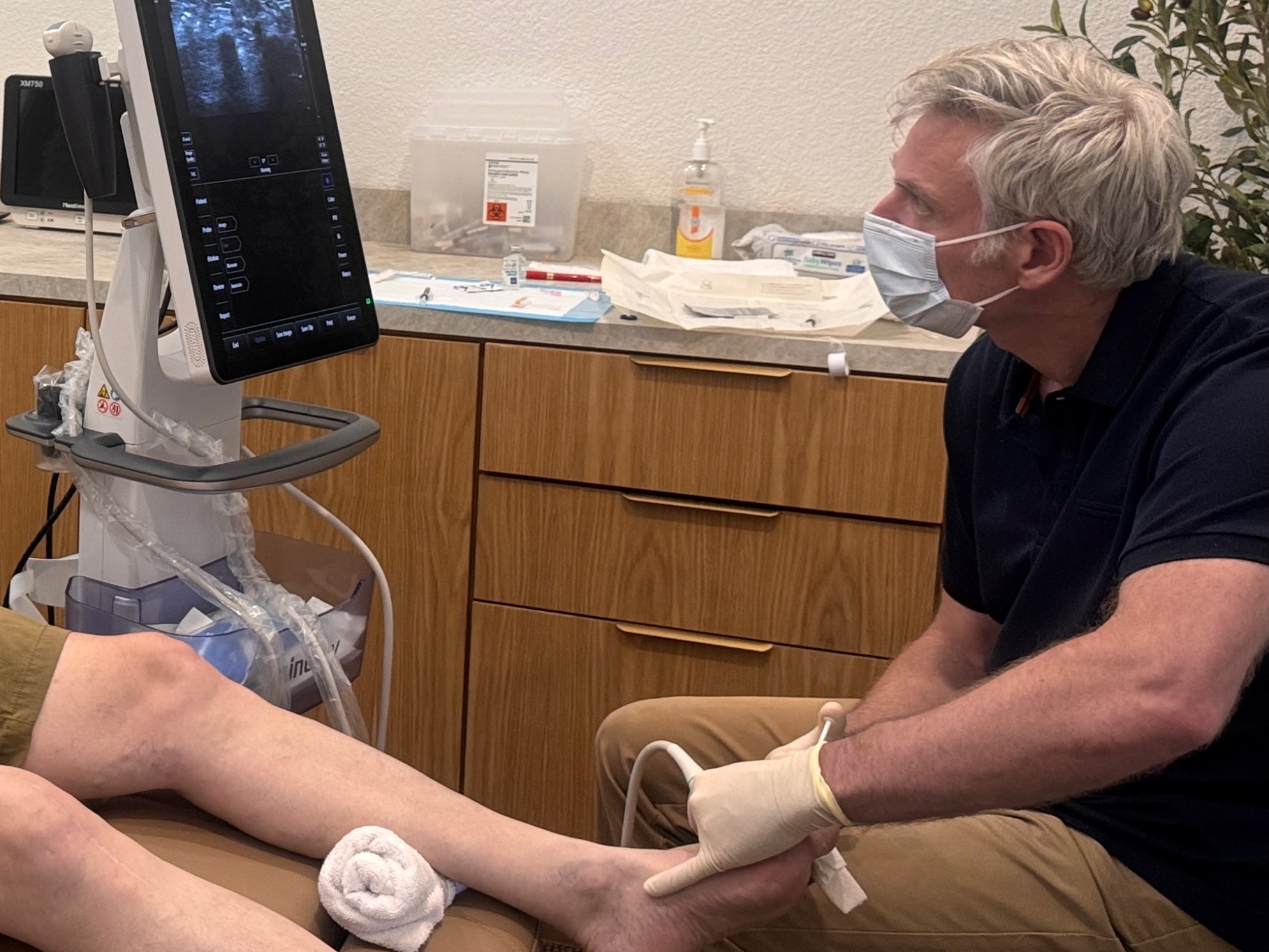
Physician performing ultrasound-guided foot evaluation at Alypos Regenerative Pain and Wellness in Southlake, Texas

Precision Extends Beyond the Injection

At Alypos, regenerative medicine is approached as a process rather than a product.

Successful treatment depends on more than simply injecting PRP or another biologic—it begins with selecting the right patient, identifying the correct target, and preparing the biologic thoughtfully.

When appropriate, platelet-rich plasma (PRP), platelet-rich fibrin (PRF), bone marrow concentrate, and other biologic therapies are prepared using protocols tailored to the clinical objective rather than relying on a one-size-fits-all approach.  

Careful attention is given to collection, processing, concentration, and image-guided delivery.

The biologic itself is only one part of the equation.  

Diagnosis, preparation, and precise placement all influence the opportunity for healing and recovery.

Treatment Follows Understanding

After more than two decades treating complex pain conditions, I’ve learned that lasting improvement rarely comes from chasing symptoms alone.

It comes from understanding what’s actually driving them.

If you’ve been through treatment after treatment without lasting relief, the next step isn’t necessarily another procedure.

It may be a more thoughtful evaluation.
Text Dr. Bernhardt

Frequently Asked Questions About Foot & Ankle Pain Treatment

Why do I still have foot or ankle pain after physical therapy?

Physical therapy can help, but it works best when the true source of symptoms has been identified. If pain is coming from an injured ligament, irritated nerve, unstable joint, tendon injury, fascia problem, or another untreated structure, therapy may not provide lasting relief.

Why did my injection only help for a short time?

Short-term relief can mean inflammation was reduced, but the underlying problem was not fully addressed. It can also mean the correct structure was not treated precisely enough, or that more than one structure is contributing to the pain.

Can ultrasound find things an MRI misses?

Sometimes. MRI is helpful, but it is a static image. Dynamic ultrasound allows certain tendons, ligaments, fascia, joints, and nerves to be evaluated in real time while symptoms are reproduced.

Is regenerative medicine useful for foot and ankle pain?

It can be appropriate for selected tendon, ligament, fascia, joint, or soft tissue problems. At Alypos, regenerative medicine follows diagnosis. The decision depends on the structure involved, tissue quality, severity of injury, prior treatment, and whether a biologic treatment is likely to be appropriate.

Is PRP the same everywhere?

No. PRP and other biologic treatments are not commodities. Outcomes depend on patient selection, biologic preparation, image-guided placement, and physician experience.

What if I have already had foot or ankle surgery?

Prior surgery does not automatically mean there are no remaining options. Persistent pain may come from scar-related restriction, nerve irritation, joint overload, tendon dysfunction, instability, or another source. Evaluation begins with understanding why symptoms are still present.

Do you accept insurance?

Alypos is a direct-pay practice and does not bill insurance. This allows for longer physician visits, detailed evaluation, and individualized care without treatment decisions being driven by insurance protocols. Patients may request documentation for possible out-of-network reimbursement when appropriate.

Alypos Regenerative Pain & Wellness Logo