Spine and back pain may arise from disc irritation, facet joint inflammation, sacroiliac joint dysfunction, muscular overload, or nerve root involvement.
Symptoms can range from localized stiffness to radiating discomfort into the arm or leg.
For some individuals, pain is recent and activity-limiting. For others, symptoms persist despite therapy, medication, or prior procedural treatment.
In some casees, cervical spine dysfunction may contribute to persistent shoulder discomfort and overlapping headache patterns.
At Alypos Regenerative Pain & Wellness, spine pain is evaluated through detailed clinical assessment and image-guided examination to clarify the primary pain generator before determining a treatment plan.
Back and spine pain may arise from a variety of structural, mechanical, and neurologic sources. Common causes include lumbar disc herniation, facet joint arthropathy, sacroiliac joint dysfunction, degenerative disc disease, spinal stenosis, radiculopathy (sciatica), cervical disc pathology, muscular strain, and post-surgical changes.
Symptoms may reflect localized mechanical irritation, inflammatory processes, nerve root involvement, or a combination of contributing factors. Careful evaluation distinguishes clinically meaningful findings from incidental imaging abnormalities and clarifies the true pain generator.
The spine is a dynamic structure involving discs, joints, ligaments, musculature, and neural elements.
Pain may reflect mechanical overload, degenerative change, instability, nerve irritation, or a combination of contributing factors.
In active individuals, symptoms may be triggered by sport, lifting, prolonged sitting, or repetitive strain. In others, post-surgical changes or chronic inflammation may influence pain patterns.
A careful evaluation distinguishes structural findings from incidental imaging abnormalities and identifies which elements are clinically relevant.
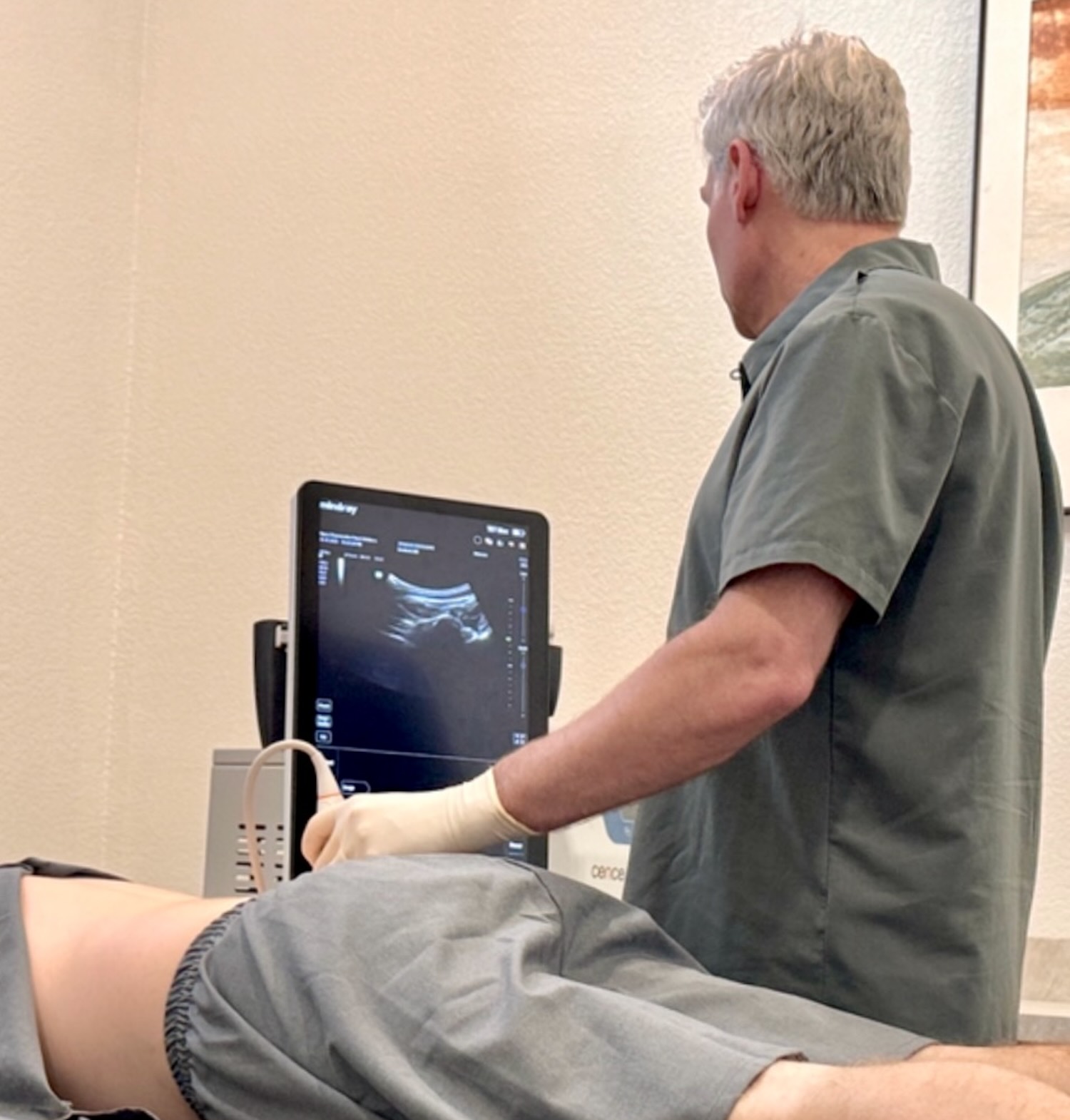
Care at Alypos is physician-only and individualized. Evaluation includes detailed functional assessment, review of prior imaging, and when appropriate, ultrasound-guided diagnostic examination to assess soft tissue, joint, and neural contributors.
The goal is diagnostic clarity. Not every patient requires procedural intervention. When indicated, precision-guided therapies may be considered within a structured and individualized care strategy.
Both early-stage symptoms and longstanding spine pain are approached with the same emphasis on clarity and deliberate planning.
When appropriate, precision-guided and regenerative therapies may be considered within the context of a comprehensive diagnostic assessment.
Treatment decisions are individualized and guided by clinical findings, imaging correlation, functional limitations, and long-term spine health rather than predetermined protocols.
Image-guided spine injections may be used diagnostically or therapeutically to clarify and address specific pain generators.
These may include epidural steroid injection for radicular symptoms, facet joint injections, medial branch blocks, or sacroiliac joint injections when clinically indicated.
The goal of interventional care is diagnostic clarity and targeted relief — not indiscriminate procedural escalation.
In selected cases, regenerative medicine approaches may be considered for facet joint–related pain, sacroiliac joint dysfunction, or carefully evaluated disc-related conditions.
Platelet-Rich Plasma (PRP) and other autologous biologic therapies may be discussed when appropriate within a broader spine care strategy.
These options are considered only after thorough evaluation and discussion of realistic expectations, with emphasis on structural stability and long-term functional improvement.
Persistent or function-limiting spine pain deserves careful structured evaluation.
Whether symptoms are recent or longstanding, a comprehensive physician consultation helps clarify diagnosis and appropriate next steps.
Care begins with understanding the spine in motion and in context — not simply interpreting imaging findings in isolation.
Schedule a Consultation